

Ultrarobots
Building the best endurance athletes we’ve ever seen


Concept art by Chris Brock for The Wild Robot
I like running long distances. There are many reasons why I like it, cliché and not, but put simply there’s nothing better than doing a hard thing in a wild place. On a recent mission, a few hours into being on trail with fast depleting glycogen levels, I started thinking about how similar humans running long distances are to successfully deploying robots in the wild. I’m cognisant this is going to sound like “what running taught me about B2B sales,” please indulge me.
Let’s consider the ultrarunner as a system, call it UltraSam. UltraSam’s goal is to sustain output over a long time and distance without breaking down. I have lots of constraints. I have limited fuel and carrying capacity. The terrain I move over constantly changes, as does the weather. All the while I need to make lots of small decisions locally often with no mobile data.

UltraSam in its environment
Through training, learning and a bit of discipline I (UltraSam) can get pretty good at doing this running thing. I can improve my aerobic base, dial in my fuelling and learn to make better decisions over time. Essentially, I can move closer to humanity’s limit of endurance performance.
Whilst there is a little bit of willpower involved, it’s mostly evolution. Our muscles, lungs, cooling systems and reflexes are the result of roughly four billion years of optimisation for completing this task on Earth. Humans are relatively good endurance mammals.
But while I don’t really want to admit it, I (or we as humans) have a ceiling. Zooming out to consider broader biology, humans are not the global champions of endurance. Birds can sustain aerobic effort in flight for far longer than we can sustain running. Whales traverse distances without pause that are difficult to comprehend. Mountain goats move across steep rock faces with a balance and efficiency that makes human movement look clumsy. These all show that in nature there are examples of systems pushing beyond human biological constraints to beat us in specific environments to complete distinct sets of tasks.
However, we have been able to surpass these limits. How? We built tools. We built technologies, using intelligence to turn energy and materials into useful tools to transcend our human form.
As we’re talking about running, or locomotion, perhaps the best example here is the bicycle. With this elegant mechanical system, we became orders of magnitude more energy-efficient as a system of locomotion. We removed the constraints of our form through tools and unlocked new capabilities. I deal with this later, but a similar line of thinking is essential for robots to be the foundational technology to take us to an abundant future.
Ok so back to robotics…
At ReGen we think a future of abundance depends on building intelligent robotic systems to shape energy and matter into the essential things humans need/want/desire to flourish within the resource constraints of the Earth.
So why do these robots need to be endurance athletes? Because to unlock human flourishing, we need machines capable of exploring and doing things across the entire Earth, not just the factory floor.
Right now, the accessible area robots can be deployed is tiny compared to the total Earth’s surface. It’s likely around 1-3% of the Earth’s surface by most of today’s robot form factors.1 The complexity and dynamism of the physical world make perception and navigation infinitely harder than in a controlled environment with a flat surface and neatly organised rows.
We are obsessed with the possibilities of what this could unlock. Systems being deployed in treacherous terrain, dry deserts, across plentiful pastures. Less cleaning toilets and more fighting wildfires, monitoring the depths of the open ocean, boring beneath the earth.
Because of this vision, we spend less time focused on replacing human labour 1:1 and more on how robots can unlock new paradigms of how (and where) work is done across all of the Earth.
To grow the reachable world of robotics, we need to build systems that excel at endurance. That means optimising the whole machine, the way an endurance athlete optimises their entire system. Fuel delivery, energy efficiency, decision making, movement, recovery, adaptation.
Today, we are a long way from this. As I have discussed previously in the Robofauna essay, we believe if robots are to play an essential role in human flourishing, then we should not design them as slightly improved versions of ourselves. We should design them as the best endurance athletes the world has ever seen. If we over-index on humanoids and inherited forms, we risk optimising within a familiar valley instead of exploring what is truly possible.
Thus, robots need to push beyond our and their current physical and energy limits. This essay explores what is being done at the frontier to extend the physical and energetic range of robots.
The core parts of the stack to unlock Ultrarobots
Core to expanding the reachable world for robots is pushing the frontier in three core areas2:
Unlimited energy consumption
Better morphology for better energy efficiency
Better brains for better energy and data efficiency
Unlimited energy consumption
Lithium-ion batteries have become the default in robotics. There are a number of logical reasons why this is the case. Learning curves from EV batteries and energy storage have driven lithium-ion costs down dramatically compared to most other energy carriers. It also supports relatively fast charge and discharge cycles. It integrates easily with electric actuation, which has become the default architecture for most mobile robots.
However, this does not mean that a battery on its own is the only paradigm that can unlock Ultrarobots. There are obvious challenges with lithium-ion batteries. On their own, they offer relatively short operational duration, which limits range, and whilst charge times are improving they are not instantaneous. The Unitree G1 humanoid, for example, reportedly has to charge for one hour to operate for two. There is also the charging infrastructure requirement.
One path to reduce charging dependency and increase the reachable world for robots is to build systems that can run by ambient energy, i.e. the sun and wind. Our portfolio company Aigen does this with a 350W solar system that meaningfully extends range. If the wind conditions are right, the panel can even act as a sail. By complementing the battery with the panel, their robot can operate more than 12 hours continuously across rugged and diverse terrain:
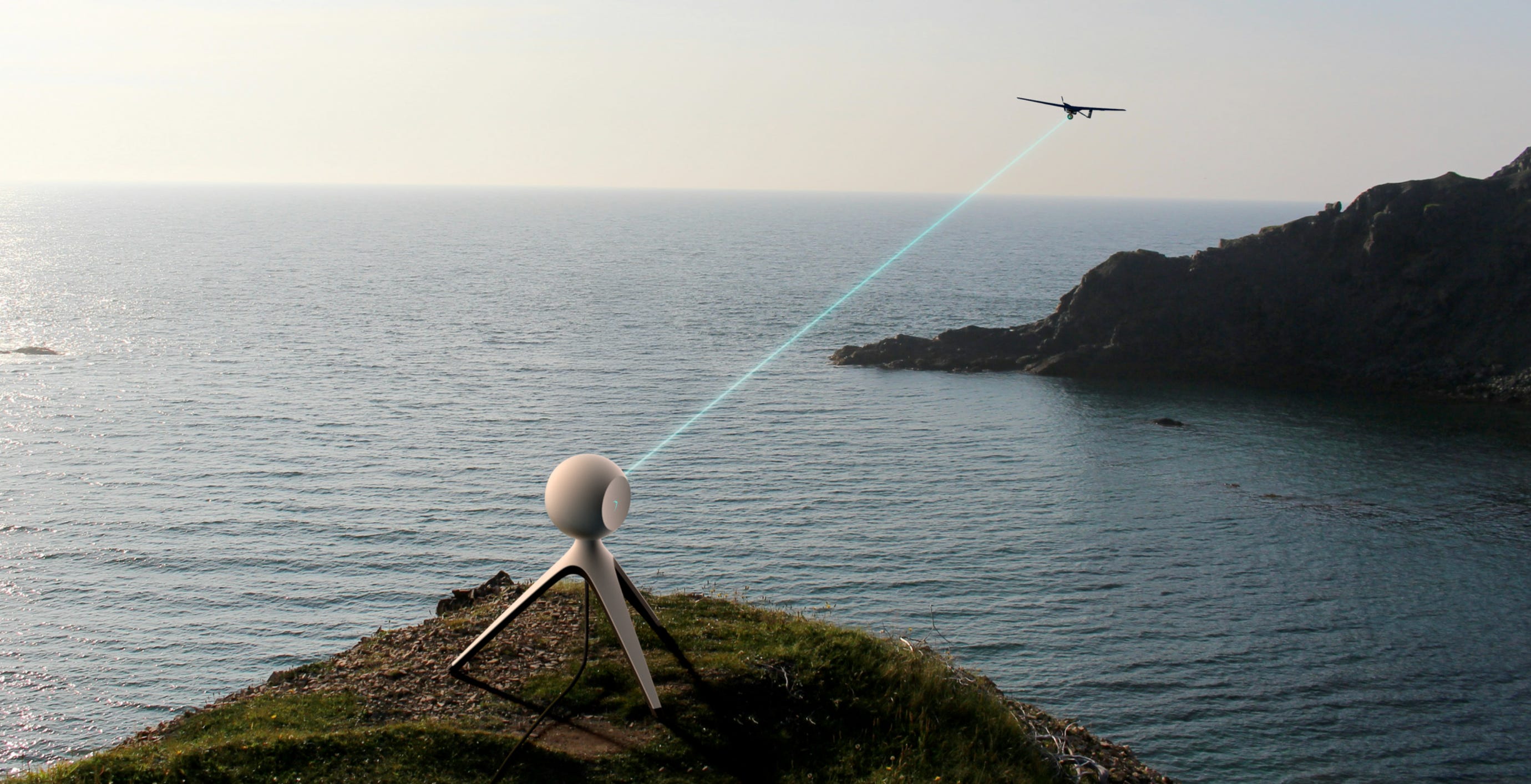
Another approach is wireless power. Instead of docking, robots operate inside powered zones or receive beamed energy that extends their range. The team at Aquilla is building this and focused on extending the range of drones.
For runners, this would be like a continuous IV drip of the perfect fueling mix. Yes please.
Another wild possibility is biohybrid systems that combine living biological parts with engineered robotic components. The belief is that you get the best of both worlds: the adaptability, resilience and efficiency of biology with the precision and control of engineered systems. In biohybrid systems they could use abundant biological feedstocks as an energy input, combined with a dense fuel cell that has the benefit of rapid refueling and long-range usage. Check out Palmer Luckey musing on this possibility:
All of these elegant solutions show how we can push beyond biological barriers. In biological systems there is always a trade-off between effective ambient energy generation and effective movement.
Robots step outside that fitness valley by decoupling where energy comes from and what the body must look like to move and work, because we have denser energy generation opportunities such as solar PV, or we can beam energy so the robot moves rather than the robot needing to move to energy.
Better morphology for better energy efficiency
A strong endurance runner does not simply carry more fuel. They use the least amount of energy per step. Watch the East Africans run marathons and you will understand the phrase “running economy”.
As I mentioned above, most robots today use electric actuators, pairing electric motors with gearboxes. The architecture borrows heavily from EV drivetrains, but robots are very different from cars. Robots in varied environments often spend a lot of time bracing, stabilising, making small corrections, and handling changing loads. The constant correcting and holding of torque shifts the motors away from their optimal efficiency point, resulting in lost energy.
Lots of work has gone into optimising the ratio between gearboxes and motors to maintain torque density and whilst the focus seems to have shifted more to dexterity, there still appears to be meaningful room for improvement to unlock long-duration, hyperefficient locomotion.
Whilst most robotics systems have shifted away from hydraulics, there are some potential interesting blends that utilise the very high power density it offers. Hydraulics is excellent for brute force motion and there may be form factors where it can unlock completion of heavy payload tasks in rugged environments. Based on this, some companies (like the Robotic Actuators Company) are combining the benefits of electric and hydraulic actuation, replacing the need for a motor and gearbox at every joint with a central electric power unit that drives multiple joints through a digitally controlled hydraulic system. This gives the ability for short bursts of high force, whilst also being able to operate at partial loads to stabilise or reposition. It is an elegant way to concentrate power generation in one unit and distribute it to joints only when needed.
We need to continually find more ways to improve how much energy the robot body burns in locomotion, i.e. the robot’s running economy.
Better brains for better energy and data efficiency
Endurance in the wild is as much a cognitive challenge as it is a physical one. The best endurance athletes make smart decisions locally with limited information as you rarely have WiFi or a support crew close by.
As humans, we have evolved to be relatively good at this. The human brain remains one of the most energy-efficient learning systems we know. It adapts from limited supervision and maintains robust internal models of the world under tight metabolic constraints.
Today the robot brain struggles in this environment for a few reasons. The traditional robotics pipeline of perception, localization, mapping, planning and control works well in structured settings but becomes much harder to maintain in dynamic and variable environments. As conditions change, perception becomes unreliable, robots can lose track of where they are, and planning becomes harder when the terrain or objects around the robot are uncertain. Many learning-based approaches are also trained largely offline and deployed for inference, which limits a robot’s ability to adapt once it is operating at the edge. Together this means robots often struggle in messy, constantly changing environments in the real world.
Structured world models will likely allow robots to better maintain internal representations of the world so they can adapt as conditions shift. But the scale of data generation required to do this perfectly is huge and as such it’s likely that new forms of cognition and information processing are necessary to expand the reachable world for robots.
By now you know we love the elegance of nature and the continued exploration of biologically inspired computation does interest us. If neuromorphic computing can translate even a fraction of our brain’s efficiency into machine architectures we believe it would materially shift the possibilities for the reachable world of robots. One area we’re particularly interested in within this domain are novel spiking architectures that process information only when meaningful events occur. Memory and compute can be colocated, reducing data movement. Whilst horizontal in their focus, the recently announced frontier AI lab Flapping Airplanes validates this approach as they seek to build intelligence that learns more with less data based on the premise that humans achieve far stronger reasoning despite seeing orders of magnitude less data than modern AI systems. The stack for this type of computing is also beginning to emerge with companies like Innatera building processors specifically designed for edge intelligence.
Another possible path are architectures that collapse the boundary between training and inference. Instead of training a model once and freezing it, the system can learn continuously from streaming data. New information updates only the relevant parts of the system locally. That reduces both data requirements and energy consumption, while improving robustness over long deployments.
The frontier here is changing a lot, but the direction of all these areas is to build a brain or intelligence more like the systems evolution has proven capable of long-duration performance in messy environments.
Growing the reachable world
To close out this piece, I wanted to first thank you for indulging the running analogy but I hope the point I’m making is simple and clear. Evolution produced impressive endurance within biological limits. Humans learned to build tools that allowed us to transcend those limits. With robots, we should transcend the human form and utilise tools to unlock robots that are the greatest endurance athletes we’ve ever built. Because if we do that, and expand the surface of the planet where intelligent work can happen, this lays the foundations for human flourishing on Earth.
If you’re working on anything related to power delivery, actuation, world models or compute architectures to unlock a future of abundance in robotics or energy and materials, we want to learn about it with you.
The logic here is ~0.5% of the earth’s surface is highly structured indoor environments (factories, warehouses, hospitals, homes), ~0.5% roads and paved infrastructure and then a very small percentage of agriculture, forests, ports, construction, mines can be accessed today.
This is by no means an exhaustive list of areas for extend the range of robots in the wild. We’re also aware that whilst we spend a lot of time researching and talking with roboticists the field is constantly evolving and our perspectives will be dated fast. This section is purely areas we’ve been thinking about recently and would love to be challenged by those who disagree or are thinking through adjacent capabilities that can grow the reachable world for robots.
Great piece! I feel would be remiss not to mention biohybrid microalgae robots here, for your consideration: https://advanced.onlinelibrary.wiley.com/doi/10.1002/adma.202303714